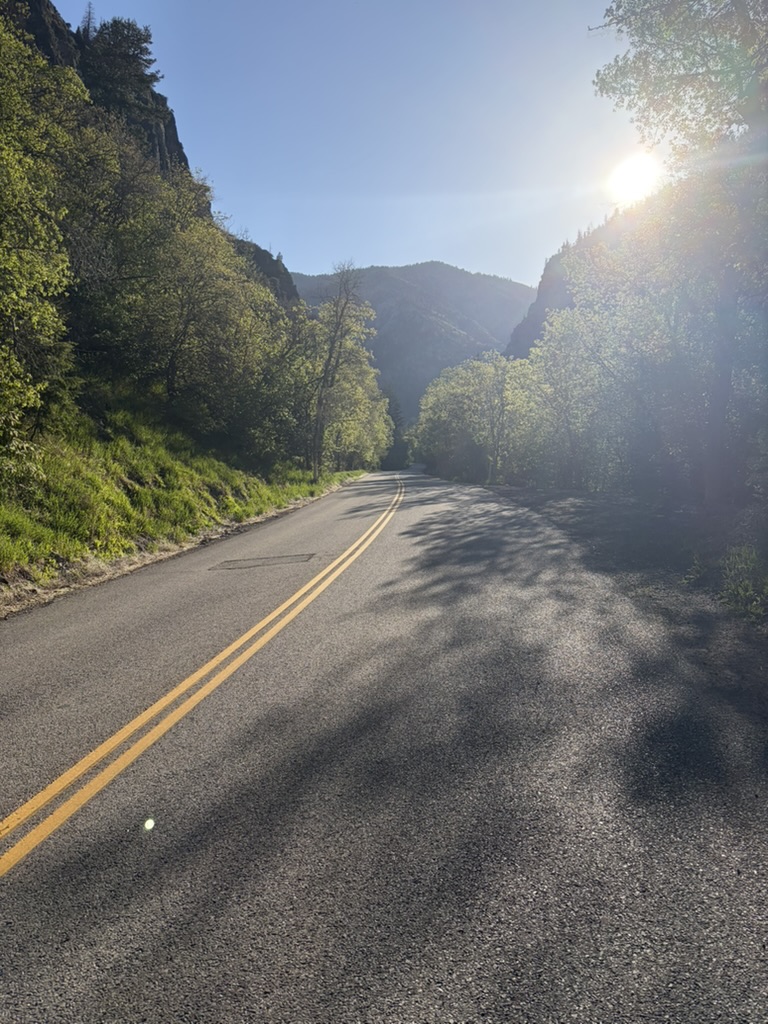
American Fork Canyon Road Climb
Thirty miles round trip, sitting basically the whole way, over three thousand feet of gain that mostly waits until you've earned the right to be tired before it actually asks anything of you. That's American Fork Canyon in a sentence, and if you're the kind of rider who likes a climb that builds instead of one that just punches you in the legs at mile two, this is your canyon.
The numbers: 30.7 miles out and back, +3,329 feet of climbing, paved the whole way, average grade a manageable 4.3%, max grade an unmanageable-feeling 8.3% near the top. Hard, not brutal. There's a difference, and this ride lives right on that line.
How it actually rides
The mouth of the canyon eases you in — this is the section where you settle into a rhythm, find your gear, and remember why you're doing this instead of sleeping in. The grade here is tame enough that you can hold a conversation, which is good, because the scenery deserves comment. You'll pass through some genuinely striking rock walls and creek-side stretches before you hit the halfway point at the Timpanogos Cave parking area — restroom, water, and a good excuse to stop pretending you don't need thirty seconds off the saddle.
Past the cave, the road keeps its manners until the Tibble Fork turnoff. This is the pivot point of the whole ride. Everything before it is a warm-up. Everything after it is the actual test.
Once you're above the winter gate past Tibble Fork, two things happen at once: the grade takes a real jump, and the center line on the road disappears entirely. Neither is dangerous, but both change the character of the climb — it gets steeper, quieter, and a little more exposed, in the best way. This is where the canyon stops being pretty and starts being the reason you drove out here.
Where to park
There's roadside parking at the mouth of the canyon before you hit the toll booth, which is the obvious choice if you want to start pedaling as close to zero as possible. If that's full, or you'd rather not fight for a spot, there's a church parking lot about three-quarters of a mile before the mouth on Timpanogos Highway that's become the unofficial overflow — plenty of riders stage there instead.
When to go, and what to watch for
The road is technically open June through October, though depending on how the winter behaved, you can often ride around the gates on either side of that window — just know you're on your own for road clearing if you push the edges of the season. Go early. Traffic is a non-issue before 9 a.m.; after that on weekends, it picks up fast, and this road doesn't have much of a shoulder to hide on. Cars generally aren't a problem, but "generally" is doing some work in that sentence, so ride like you mean it.
The bigger hazards aren't the cars — it's the occasional loose gravel or rockfall on the pavement, the wildlife that doesn't check your Strava before crossing the road, and the diesel trucks that treat lane discipline as more of a suggestion. None of this should keep you away. All of it should keep you honest.
Dress for the canyon, not for the forecast at the trailhead. Below-freezing mornings are common in early spring and fall, and you will feel every degree of that on the descent after you've sweated through the climb. Layers you can shed and stash are not optional here.
Who this is for
If you want a climb you can settle into rather than survive, with a real payoff once you're above Tibble Fork and the canyon opens up around you, this is a great one. If you're chasing something short and violent, look elsewhere — the grade here rewards patience, not power. Either way, go early, dress for the cold you'll feel before you're moving, and give the gravel and the trucks the respect they're due. The canyon will take care of the rest.